
Germany is Sweden's largest trading partner, and much of the trade between the two countries has always crossed the Baltic Sea. From Hanseatic cogs to railway ferries and modern ro-pax ships, the connections between Swedish and German ports form one of the central threads of Northern European transport history.
Early Maritime Trade
Trade between the regions that became Sweden and Germany is documented from the early Middle Ages. In the thirteenth and fourteenth centuries, the rise of the Hanseatic League — an alliance of merchant towns led by Lübeck — tied Swedish ports closely to the German Baltic coast. German merchants were prominent in Visby, Stockholm, Kalmar and other towns, and Swedish iron and copper were shipped to Lübeck, while salt, cloth and beer flowed north.
Political ties added another layer. Following the Thirty Years' War and the Peace of Westphalia in 1648, Sweden gained territories on the German coast, including Swedish Pomerania with Stralsund and the island of Rügen, and the town of Wismar. Parts of Swedish Pomerania remained under Swedish rule until 1815. These possessions meant constant shipping between the two shores.
German and Swedish Baltic Ports
On the Swedish side, the southern ports of Trelleborg, Malmö, Ystad and Karlshamn, together with Gothenburg in the west, became key points for German traffic. On the German side, Lübeck and its outport Travemünde, Kiel, Rostock with Warnemünde, Stralsund and Sassnitz on Rügen developed as gateways to Scandinavia. Each port's role changed with politics, technology and the railway map.
The Industrial Revolution
In the nineteenth century steamships and railways reshaped Baltic shipping. Regular steamship lines began to connect Sweden and the German coast, carrying mail, passengers and goods on fixed schedules. Industrialisation in both countries multiplied the volume of trade, and the growing railway networks created pressure for direct rail connections across the sea.
Railway Ferry Connections
The decisive step came on 6 July 1909, when the railway ferry between Trelleborg and Sassnitz opened. Known as the Kungsleden in Swedish and the Königslinie in German — the "King's Line" — it was operated jointly by the Swedish State Railways and the Prussian state railways. Train ferries carried railway wagons, including through passenger carriages, between the two countries, allowing direct rail services between Sweden and Berlin.
The Trelleborg–Sassnitz link was interrupted and affected by the World Wars and the division of Germany, when Sassnitz lay in the German Democratic Republic, but it remained an important rail corridor throughout much of the twentieth century. Other railway ferry routes later connected Trelleborg with Travemünde and Rostock.
The Development of Passenger Ferries
As tourism and international travel grew in the twentieth century, passenger ferries became larger and more comfortable, with cabins, restaurants and lounges. Overnight crossings, such as those between Gothenburg and Kiel, allowed travellers to sleep on board and arrive refreshed. Stena Line, founded in Gothenburg in 1962, became one of the leading operators on routes between Sweden and Germany.
Automobile Ferry Transportation
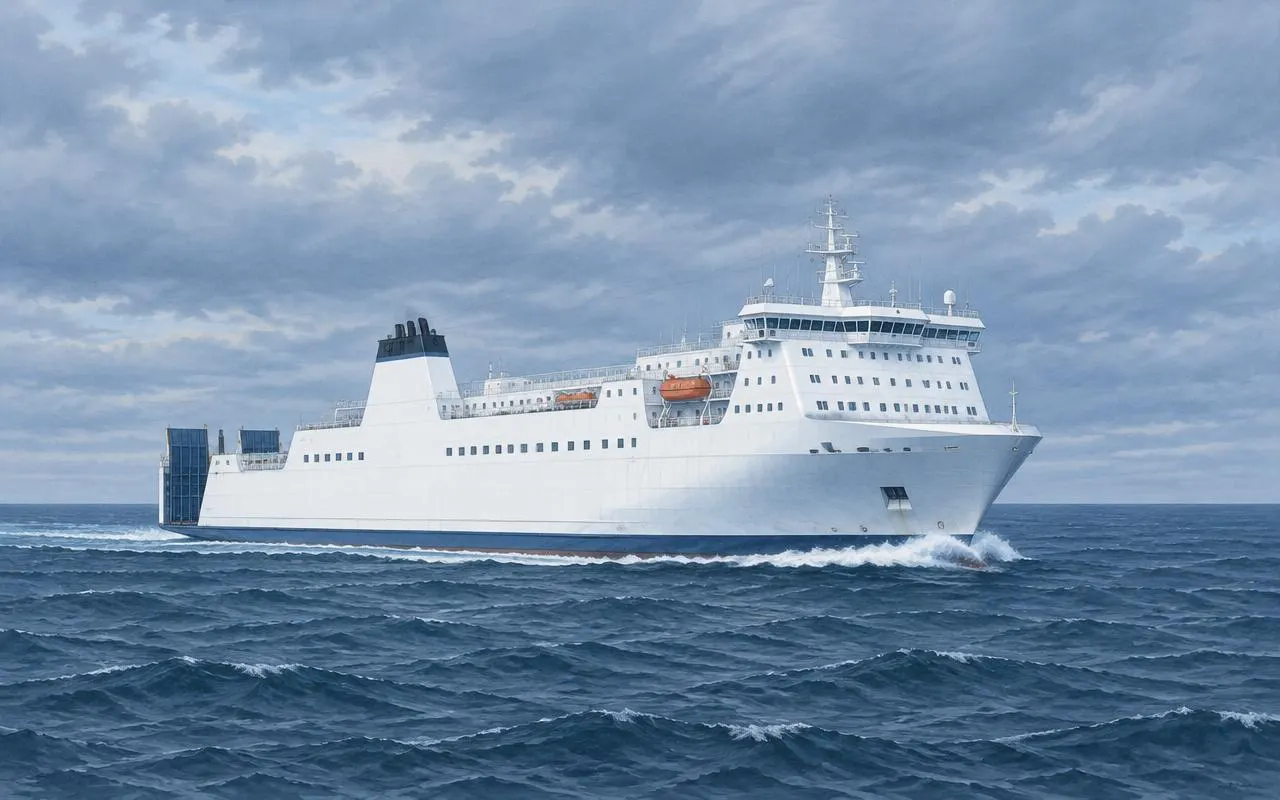
From the 1960s, roll-on/roll-off ferries allowed cars, coaches and lorries to drive directly on and off. TT-Line, founded in 1962, began services between Travemünde and Trelleborg — the name derives from the two ports. Road freight became a crucial part of ferry traffic, and many ships were designed primarily for lorries and trailers with passenger accommodation for drivers and travellers.
The Role of Trelleborg
Trelleborg, at the southern tip of Sweden, became the country's leading ferry port for traffic to Germany. Its position gives the shortest sea route to the German Baltic coast, and its role grew with the railway ferry of 1909 and later with road freight. Today Trelleborg handles very large volumes of freight and passengers and is one of the largest ro-ro ports in Scandinavia.
The Role of Northern German Ports
Sassnitz on Rügen gained importance through the railway ferry to Trelleborg. Travemünde, the outport of Lübeck, developed into a major ferry harbour after the Second World War. Kiel became the German terminal for overnight ferries from Gothenburg, and Rostock grew strongly after German reunification in 1990, becoming one of the most important ferry ports on the German Baltic coast. Together these ports link Sweden with the German motorway and rail networks.
Modern Germany–Sweden Ferry Routes
Ferry routes between Sweden and Germany in recent years have included Trelleborg–Rostock, Trelleborg–Travemünde, Trelleborg–Sassnitz, Malmö–Travemünde and Gothenburg–Kiel, operated by companies such as Stena Line, TT-Line and Finnlines. Routes and operators change over time, so travellers should always confirm current services, timetables and fares directly with the ferry operator. Scandlines, by contrast, is today known mainly for its Denmark–Germany routes, including Rødby–Puttgarden and Gedser–Rostock — a reminder that "Scandlines" and "Sweden–Germany ferries" are not the same thing. For the wider Germany–Denmark–Sweden journey see our Øresund Bridge chapter.
Historical Timeline
- 13th–15th c.
Hanseatic trade
Lübeck and Swedish ports form part of the Hanseatic trading network.
- 1648
Peace of Westphalia
Sweden gains territories on the German Baltic coast, including Swedish Pomerania.
- 1815
End of Swedish Pomerania
Sweden's last German territories in Pomerania are transferred to Prussia.
- 1909
Kungsleden opens
On 6 July the Trelleborg–Sassnitz railway ferry links Swedish and German railways.
- 1962
New ferry companies
Stena Line is founded in Gothenburg; TT-Line is founded and begins Travemünde–Trelleborg services.
- 1990
German reunification
Rostock and other eastern German ports gain new importance for Scandinavian traffic.
- 1998
Scandlines formed
The Danish and German state ferry operations merge.